Creators
A creator wants narration, character dialogue, or a quick draft without recording every line.
They can test ideas while keeping private scripts and unreleased material out of tools that do not clearly explain retention.
voice ai youtubeTrust, explained
Can I trust voice AI? The honest answer depends on the tool, the data you share, and how carefully you review its permissions, privacy terms, and outputs.
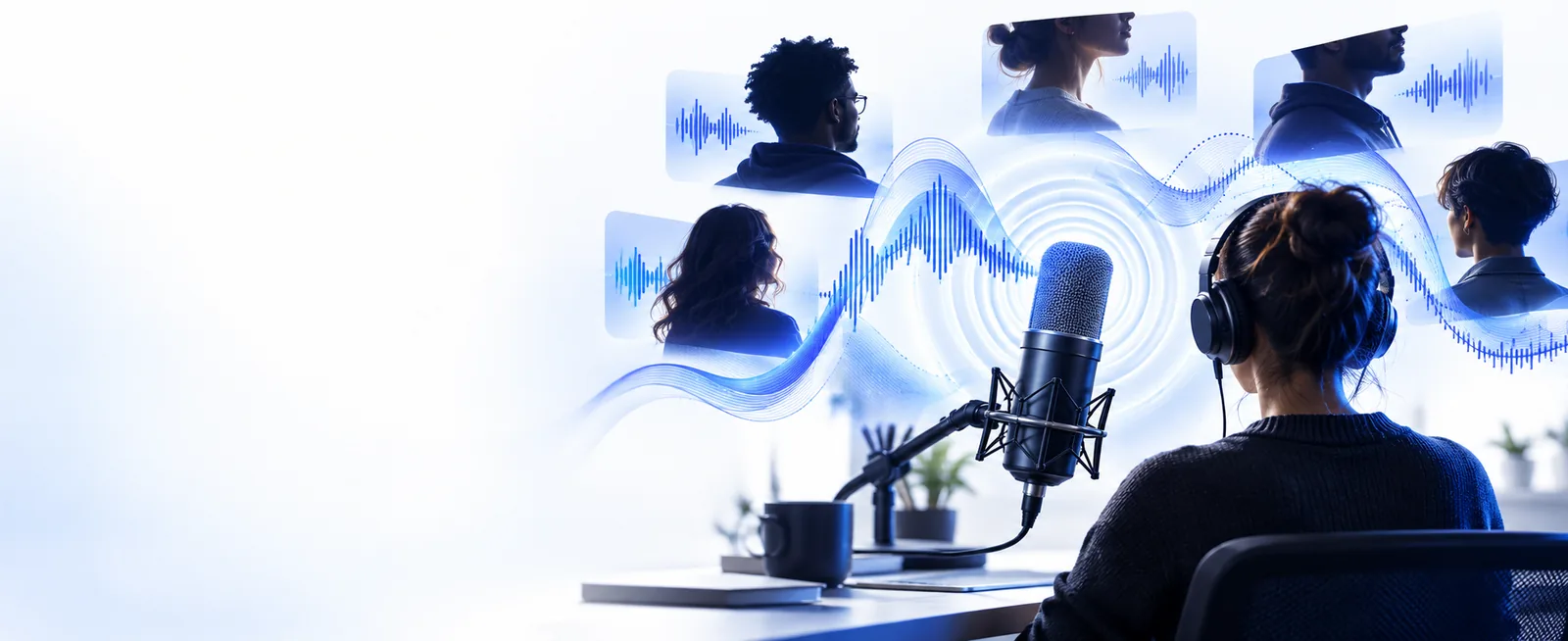
Modern voice tools can transcribe, transform, or generate speech through cloud-based models. Trust comes from understanding the data path before you use one.
Voice AI is now used by people with different risk profiles. The safest approach is to match the tool and the information shared to the task.
A creator wants narration, character dialogue, or a quick draft without recording every line.
They can test ideas while keeping private scripts and unreleased material out of tools that do not clearly explain retention.
voice ai youtubeA user needs speech support, clearer playback, or an alternative way to interact with content.
They can focus on consent, device permissions, and whether sensitive conversations are processed locally or remotely.
ai voice chat onlineA team uses synthetic speech for training, product demos, or internal communications.
They can document approval, restrict access, and label generated audio so listeners are not misled.
free custom ai voiceA musician explores vocal textures or placeholder parts during an early composition stage.
They can verify rights and avoid uploading protected stems or another performer’s voice without permission.
best ai voice generator for musicA trustworthy workflow is less about believing a label and more about making three deliberate checks before and after generation.
Read what the service collects, whether uploads are retained, and whether recordings may be used to improve models. Do not submit sensitive audio by default.
Use short, non-sensitive samples for testing. Remove names, confidential details, and identifying background sounds when they are not needed.
Listen for errors, misleading phrasing, or an imitation that could confuse people. Label synthetic content when the audience could reasonably mistake it for a real speaker.
No voice AI route removes every privacy, consent, or accuracy risk. These limits are part of making a realistic decision.
A delete button or privacy statement may not explain every backup, retention period, or third-party processor.
WorkaroundCheck retention and deletion terms before uploading important recordings, and use non-sensitive test audio first.
A tool may generate a convincing voice, but it cannot establish that the speaker agreed to cloning or publication.
WorkaroundGet clear permission from the speaker and keep a record of the approved purpose.
Generated speech can mispronounce names, alter emphasis, or deliver incorrect text with confidence.
WorkaroundProofread the script and listen to the complete output before sharing it.
Voice impersonation can support fraud, harassment, or deception even when the underlying technology is legitimate.
WorkaroundUse authentication beyond voice alone and treat unexpected voice requests as unverified.
The following comparison shows why trust should be assessed by workflow, not by whether audio sounds natural.
Careful voice AI use
Unverified voice AI use
Careful voice AI use
Short, relevant, non-sensitive audio
Unverified voice AI use
Private or identifying recordings uploaded without review
Careful voice AI use
Permission covers the intended use and audience
Unverified voice AI use
Consent is assumed because the file was accessible
Careful voice AI use
Retention, processing, and deletion terms are checked
Unverified voice AI use
Terms are skipped or unclear
Careful voice AI use
A person checks pronunciation, meaning, and tone
Unverified voice AI use
Generated audio is published automatically
Careful voice AI use
Synthetic audio is labeled when confusion is possible
Unverified voice AI use
Listeners are encouraged to believe it is authentic
Careful voice AI use
Important requests use a second verification method
Unverified voice AI use
A familiar-sounding voice is treated as proof of identity
Careful voice AI use
The user confirms ownership or permission for the voice and script
Unverified voice AI use
A voice is copied because the result is technically possible
The difference is usually visible in the process around the audio, not just in the audio itself.
Trust improves when consent, review, and disclosure are visible.
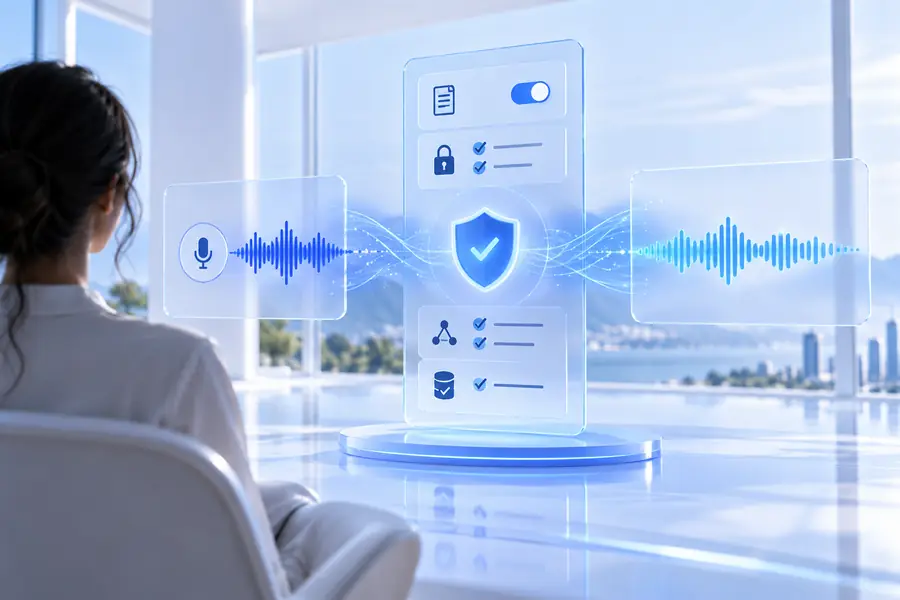
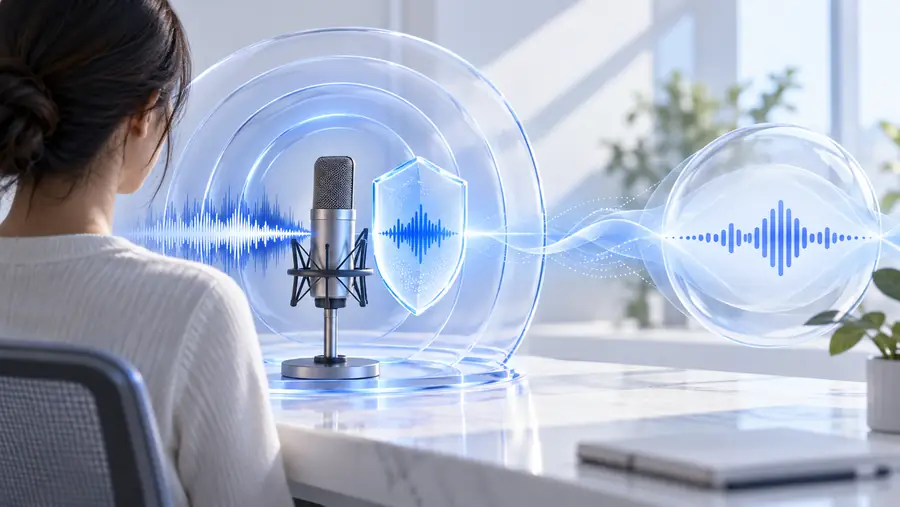
These are practical checkpoints rather than guarantees. Each one reduces a different category of avoidable risk.
You do not need to reject voice AI to use it responsibly. Start with a limited task, share only what is necessary, verify the result, and make the synthetic nature clear when it could affect someone’s decision.
Review voice AIAnswers to the core question behind this page: can i trust voice ai?
You can use voice AI more responsibly when you understand what data it collects, where processing occurs, how long recordings may be retained, and how outputs are used. Trust should be based on the tool’s policies and your workflow, not on how natural the voice sounds.
Do not assume that a voice tool is safe for confidential conversations unless its privacy and processing terms clearly support that use. Avoid sharing sensitive information, and check whether audio is uploaded, stored, reviewed, or used for model improvement.
Some systems can create a close imitation from recorded speech, but technical ability does not equal permission. The speaker’s consent, the intended use, and the laws that apply should be addressed before creating or sharing a replica.
Yes. Natural-sounding generated speech can be misheard as authentic, especially in short messages or familiar voices. Review the output and disclose that it is synthetic whenever listeners could reasonably be confused.
Use a second channel or a known contact method for important requests involving money, credentials, access, or urgent action. A familiar voice alone is not reliable proof of identity.